
8 September 2026 - When Water Becomes Uncertain, Communities Find Answers


This Time, They Were Ready: How Kelafo Acts Before Hazard Strikes
When the River Rises Without Warning
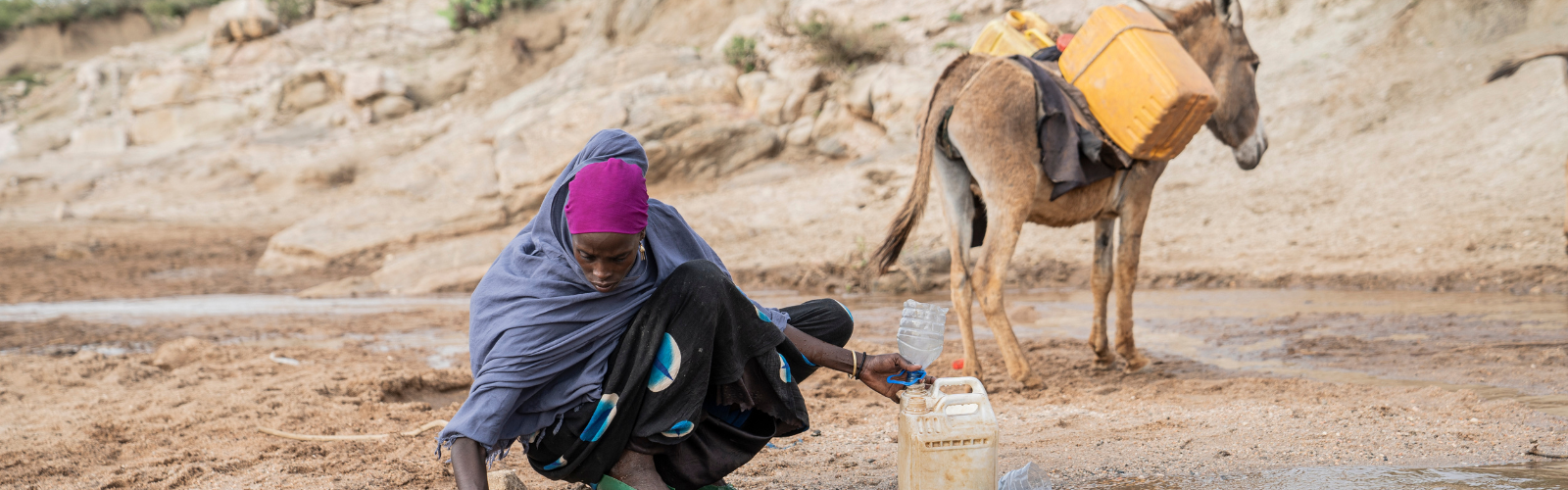
For generations, communities along the Shebelle River in Kelafo Woreda, a district in Ethiopia’s Somali region, have faced floods and droughts with little advance notice. Information arrived late, communication between communities and authorities was fragmented, and responses came only after damage was done.
In 2023, the worst flood in 60 years displaced 15,851 people and destroyed more than 7,700 hectares of farmland. During droughts, livestock losses were often catastrophic. Recovery could take years, only for the cycle to repeat itself.
“Our community faced a lot of problems before the modern early warning system was introduced. We had floods from the Shebelle River all the time. People did not get the information they needed before the disaster happens. Many people were displaced, animals died, and farms were destroyed. Families lost their livelihoods.” – Rasumal Golay Barqab, Early Warning Committee Member, Bargun Kebele
Building on What Communities Already Know
Kelafo’s communities were never without knowledge. Elders and herders have long read signs of changing seasons through indigenous forecasting: reading bird behaviour, the timing of flowering plants, and upstream river conditions shared by neighbouring communities. But as climate patterns become less predictable, these traditional methods alone are no longer enough.
Through Water at the Heart of Climate Action (WHCA), communities, local disaster management authorities, hydro-meteorological experts and the Ethiopian Red Cross Society are working together to bridge this gap, connecting scientific forecasts with local knowledge – enabling early action.
The result is Kelafo’s first-ever Community Early Action Plan: a practical plan that helps communities prepare for floods, drought, and disease outbreaks such as malaria and cholera. Crucially, the plan is owned and led by the community itself. When a warning comes, the community does not wait for external intervention: they act.
From Warning to Action
Today, early warning information reaches Kelafo up to 15 days in advance. When a warning is issued, communities activate their plan immediately.
Rasumal Golay Barqab plays a key role. Together with other committee members, she shares alerts and preparedness information across the community and collects local data on rainfall, water availability, livestock and crop conditions to share with Kelafo’s local authorities.
Warnings are disseminated through megaphones, community meetings, mosque announcements, mobile phones, and house-to-house visits by Ethiopian Red Cross Society volunteers. This early information allows people to act before hazard strikes. For example:
- Moving livestock and household items to higher ground
- Reinforcing river banks with sandbags
- Evacuating vulnerable people to safe locations such as schools
For drought, early warnings arriving up to one month ahead give families time to store fodder, maintain water points, and move livestock before conditions worsen. When flood risks increase, actions to prevent disease outbreaks, such as mosquito net distribution and water treatment, are also triggered – cutting off malaria and cholera before they can take hold.
A Recent Example: The 2026 Floods
During the rainy season in spring 2026, communities in Kelafo received early warnings several days before floods arrived. This time, the response was timely and organised.
“Families living near the river moved their livestock and belongings to higher areas, and evacuated vulnerable people to safer places. The communities also built soil embankments, reinforced river outlets with sandbags, and evacuated water pumps. Because of these actions, fewer houses and animals were lost.” – Rasumal Golay Barqab, Early Warning Committee Member, Bargun Kebele
A Shift Towards Community Leadership
The Kelafo Community Early Action Plan represents a shift from communities reacting to disasters, to preparing for them. With a clear plan and access to early warnings, communities can act every time a risk emerges, regardless of whether external support is immediately available.
This is the essence of WHCA’s approach: connecting forecast data to local action, and ensuring communities have both the information and the means to respond. Kelafo’s Community Early Action Plan is aligned with Ethiopia’s anticipatory action frameworks, ensuring community actions connect upward into national and regional systems. It is a living document, reviewed after each hazard event and updated annually with community input to reflect local realities.
Rasumal captures what this shift means for the people of Kelafo:
“Before, people often reacted after disasters happened, when the damage was already severe. Now, communities receive reliable information early and take action before hazards strike. This has reduced panic, losses, and displacement. The improved early warnings give us time to prepare: we can protect our families, our livestock, and our livelihoods.” – Rasumal Golay Barqab, Early Warning Committee Member, Bargun Kebele
When the next warning comes — and it will come — the communities of Kelafo will be ready.
Credit: Sirak Temesgen, Netherlands Red Cross in Ethiopia, and Nasredin Ousman, Ethiopian Red Cross Society
Want to know more?
Get in touch with WHCA country coordinator for Ethiopia: Abraham Tesfaye abraham.tesfaye@redcrosseth.org







Funded by