20 January 2026 - Turning the Tide: Building Climate Resilience in South Sudan


Partners
Globally, the Water at the Heart of Climate Action (WHCA) programme is powered by a unique collaboration of six global organizations from the humanitarian, disaster preparedness, and hydro-meteorological sectors. Each partner brings its own unique expertise to support locally led climate resilience along the Nile Basin. Together, we work across the full early warning value chain, ensuring that communities are not only informed, but empowered to act and build resilience. By aligning global knowledge and technology with local leadership, WHCA turns collaboration into impact, building a future where no one is left behind when water becomes a threat.
Our partners
The Netherlands Red Cross
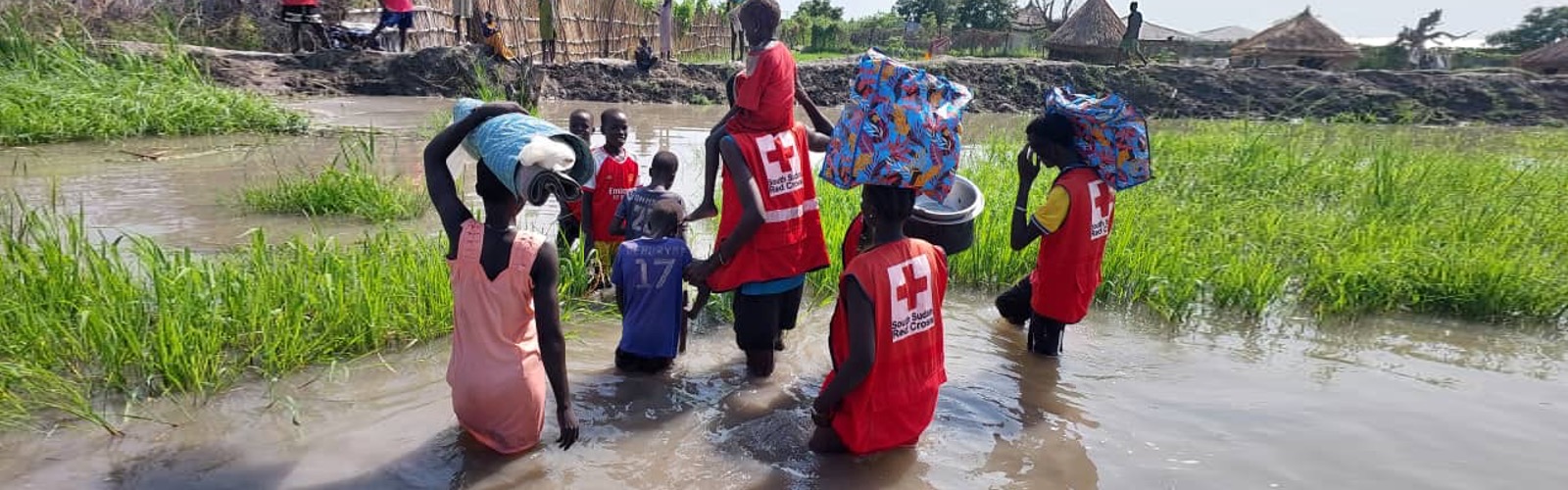
The Netherlands Red Cross leads the WHCA consortium. A trusted humanitarian partner to the Dutch public, government, and private sector, the Netherlands Red Cross connects its technical knowledge and resources to a global network to amplify the impact of climate and water resilience programmes. Within WHCA, the Netherlands Red Cross supports National Red Cross and Red Crescent Societies in Ethiopia, South Sudan, Sudan and Uganda with community-level implementation. Drawing on in-house expertise in water management, anticipatory action, and digital humanitarian services, the Netherlands Red Cross strengthens the capacity of local actors to prepare for and respond to water- and climate-related challenges. Taking a humanitarian approach to disaster risk management, the Netherlands Red Cross promotes inclusive community resilience and ensures that solutions are locally led and collaborative.
International Federation of Red Cross and Red Crescent Societies (IFRC)
IFRC brings its global humanitarian network to WHCA, helping communities turn data into action when water and climate-related risks threaten lives. Collaborating closely with WHCA consortium partners, IFRC supports communities through a holistic approach. By strengthening early warning systems, supporting climate-resilient water and sanitation services, and working alongside National Societies, offering particular support to the Rwandan Red Cross, IFRC aims to build resilience where it matters most. Rooted in the belief that the best responses begin at the local level, IFRC is committed to partnering with communities, National Societies, and governments to ensure locally-led, lasting action.
Red Cross Red Crescent Climate Centre
The Red Cross Red Crescent Climate Centre is a reference centre to the IFRC, working at the intersection of climate science, policy, and practice. Its core mission is to link global scientific insights and policy with the ambitions and actions on local level. In WHCA, the Climate Centre enables and facilitates learning at regional and global level, creating an inspiring learning journey for all partners. This learning is built on joint dialogue, diversity of practice, and active knowledge exchange to address water challenges in the Nile Basin. As such, the Climate Centre supports local partners to act and co-create adaptation processes with communities, built on cutting-edge science and forecasts.
Systematic Observations Financing Facility (SOFF)
SOFF is a specialized United Nations climate fund, established by the World Meteorological Organization (WMO), the United Nations Development Programme (UNDP) and the United Nations Environment Programme (UNEP). By providing long-term investment and technical assistance to address gaps in weather and climate observations in resource-scarce countries, SOFF plays a key role in improving early warning capabilities. Better observations lead to better forecasts, which in turn lead to better decisions and disaster preparedness for communities most affected by climate risks. SOFF promotes a peer-to-peer technical assistance approach, supporting countries in delivering weather and climate observations in a sustainable way. This data is used by initiatives like WHCA to inform climate action and strengthen community resilience.
United Nations Office for Disaster Risk Reduction (UNDRR)
Envisioning a world where disasters no longer threaten the well-being of people and the future of the planet, UNDRR leads global efforts to reduce disaster risk, build resilience, and advance the Sendai Framework. Through WHCA, UNDRR strengthens national coordination on disaster risk reduction (DRR) and helps countries understand and manage water-related risks, by improving access to reliable risk data, aligning climate, water, and DRR governance, and promoting inclusive, locally driven approaches. UNDRR’s work makes early warning and early action timely, trusted, and tied to long-term resilience planning. As most climate-related disasters are driven by water – too much, too little, or too polluted – UNDRR helps protect vulnerable communities and guide investments that reduce risk, safeguard water security, and build climate resilience.
World Meteorological Organization (WMO)
WMO is the United Nations’ specialized agency for weather, climate, and water. Working across the entire cycle of inland water management, WMO supports countries to transform data into action – from monitoring rivers and rainfall patterns to predicting water-related hazards, from enhancing early warning systems to guiding smarter water use for people and nature. By providing reliable data and science-based guidance, WMO helps countries make informed decisions for sustainable water use and climate resilience, protecting people, ecosystems, and economies. Through WHCA, WMO partners with regional and national meteorological and hydrological agencies and with local communities, developing operational tools and providing technical guidance to improve hydrological observations, impact-based forecasting, and early warning systems.



Funded by